
For warehouse & logistics teams
Digital work instructions your crew scans, follows and signs
Whale turns scattered procedures into trained crews. Alice AI answers questions mid-shift, so nobody waits on a supervisor.
- 4.8/5 on G2
- SOC 2 certified


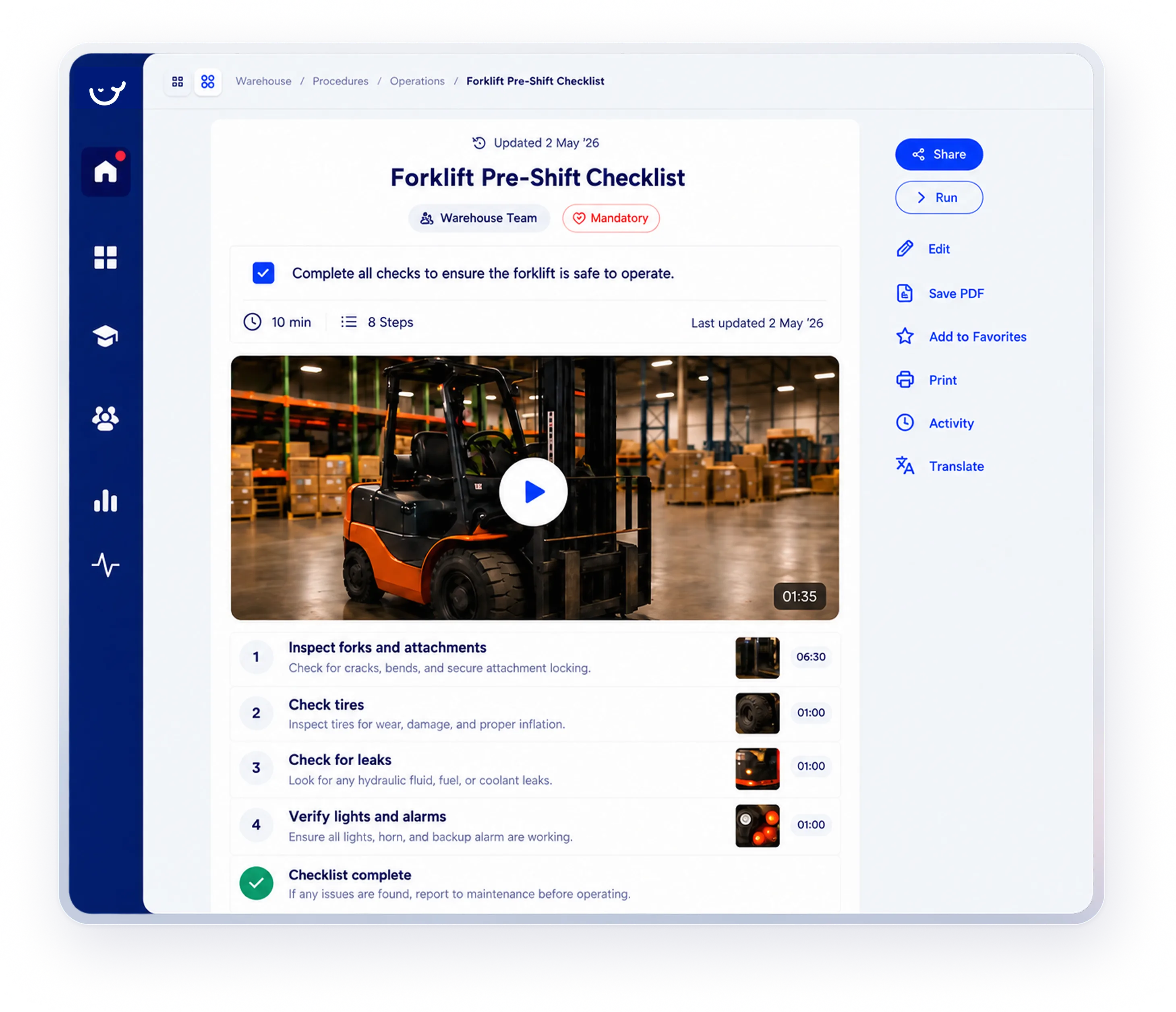
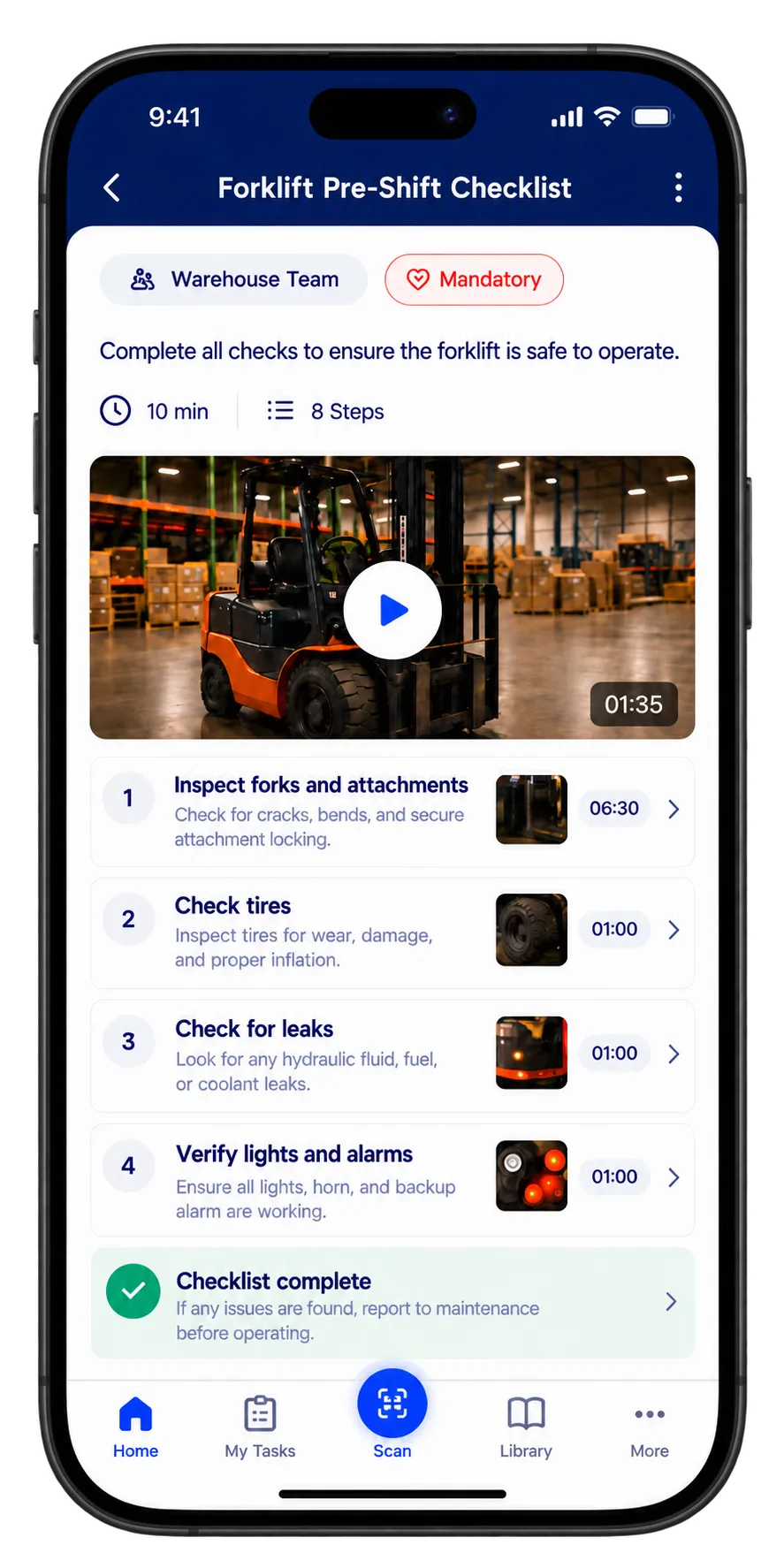







One standard for every shift. Proof for every audit.
Whale turns scattered procedures into one standard your whole crew works from. Alice AI answers your team's questions on the floor, so they stop asking you.
See how it works- TiresNot checkedDeflated
Every worker has the procedure in hand
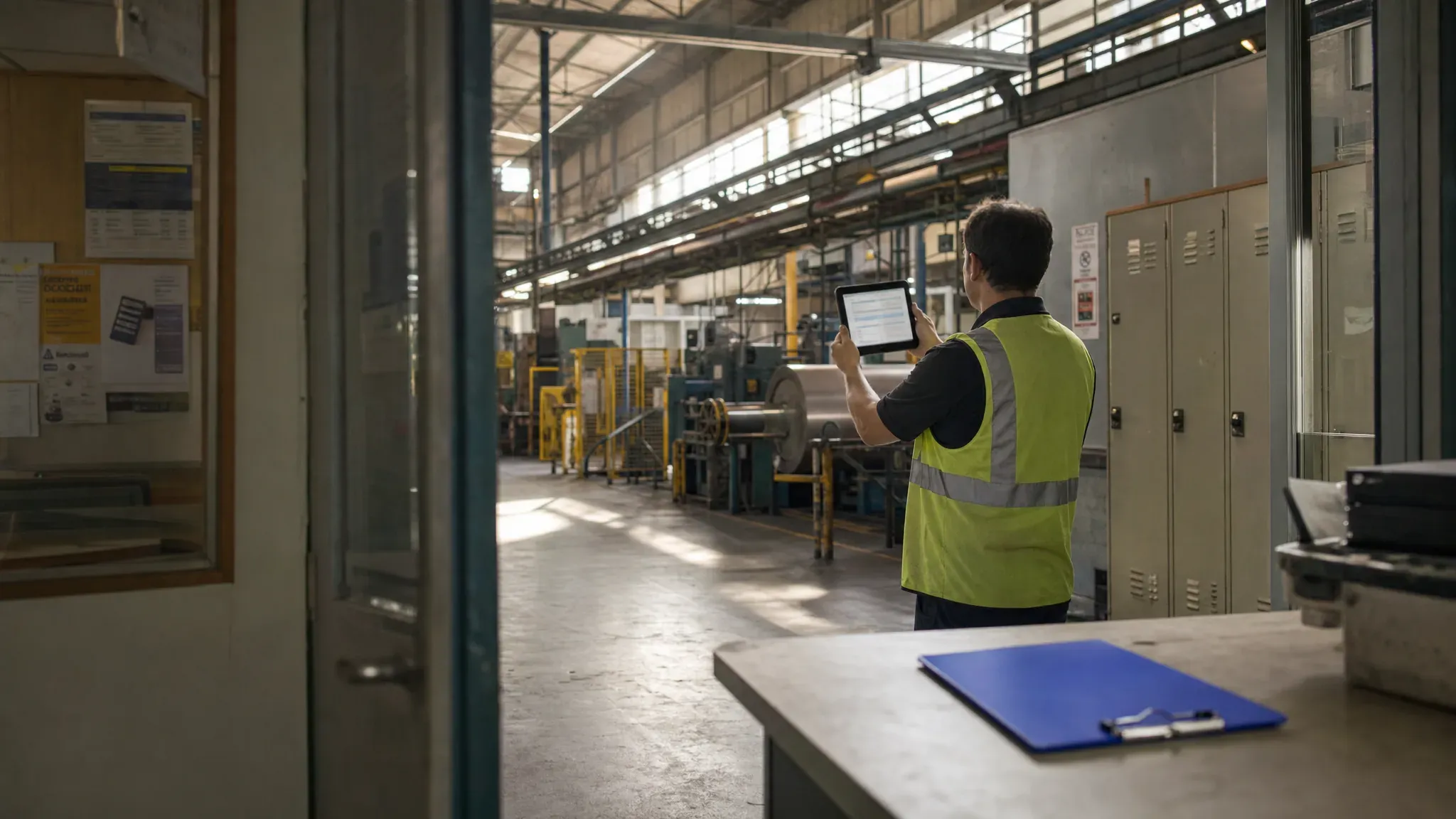
Whale puts it on the phone already in their pocket. No company email needed, and it keeps working where the signal drops.
- Back to trainingForklift Safety ManualTraining path • 4 modules1. IntroductionOverview of forklift safetyIn progress• 5 min2. Operating ProceduresRules and step-by-step guidanceNot started • 10 min3. Safety ChecksPre-operation inspection checklistNot started • 8 min4. Final AssessmentTest your knowledgeNot started • 5 min
Get people ready faster
Build onboarding for a role once and run it for every intake. Nobody shadows anybody.
- Pallet Wrapping SOPScan to start the procedure
Keep work consistent
One current version for every crew and every site. Update once and the floor sees it.
- Sign to completeForklift Safety ManualSign
Stay audit-ready
Signatures and completions land in the record while people work, so the answer exists before anyone asks.
The promise
Made for crews who don’t sit at a desk
Four things that decide whether a floor team actually uses an SOP tool, or goes back to asking the supervisor.
No company email needed
Workers get their own login without one, so everyone on the floor can sign in.
On a phone or a kiosk
Their own phone, or a shared kiosk at the station. Same procedure either way.
Works where signal drops
Keeps working in the low-connectivity corners of the site.
Answers from your procedures
Alice AI answers questions mid-shift, so nobody waits on a supervisor.
Customers
Loved for its simplicity and support
“Instead of spending hours creating training materials, we can now build and share them in minutes.”
“I can track whether team members are reading and completing their training modules.”
Whale is rated 4.8/5 on G2.
Popular workflows
Built for how a warehouse actually runs
 Picker and packer onboardingNew hires run their first shifts from step-by-step procedures, not from whoever happens to be free.
 Receiving and dispatchOne standard for inbound, putaway and loading, on every dock and every shift.
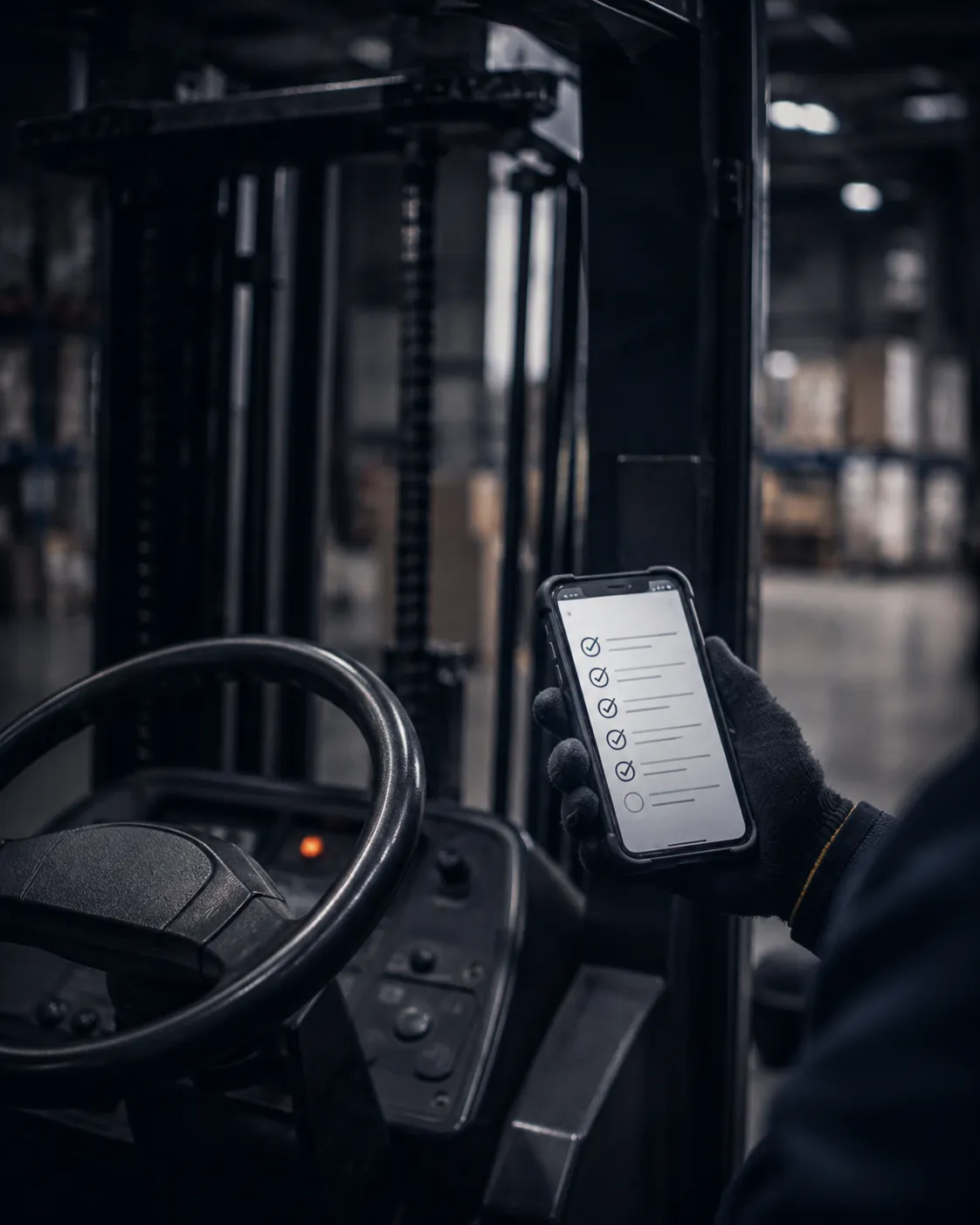 Equipment checks and handoverPre-shift checks and handover notes, completed and signed on the spot.
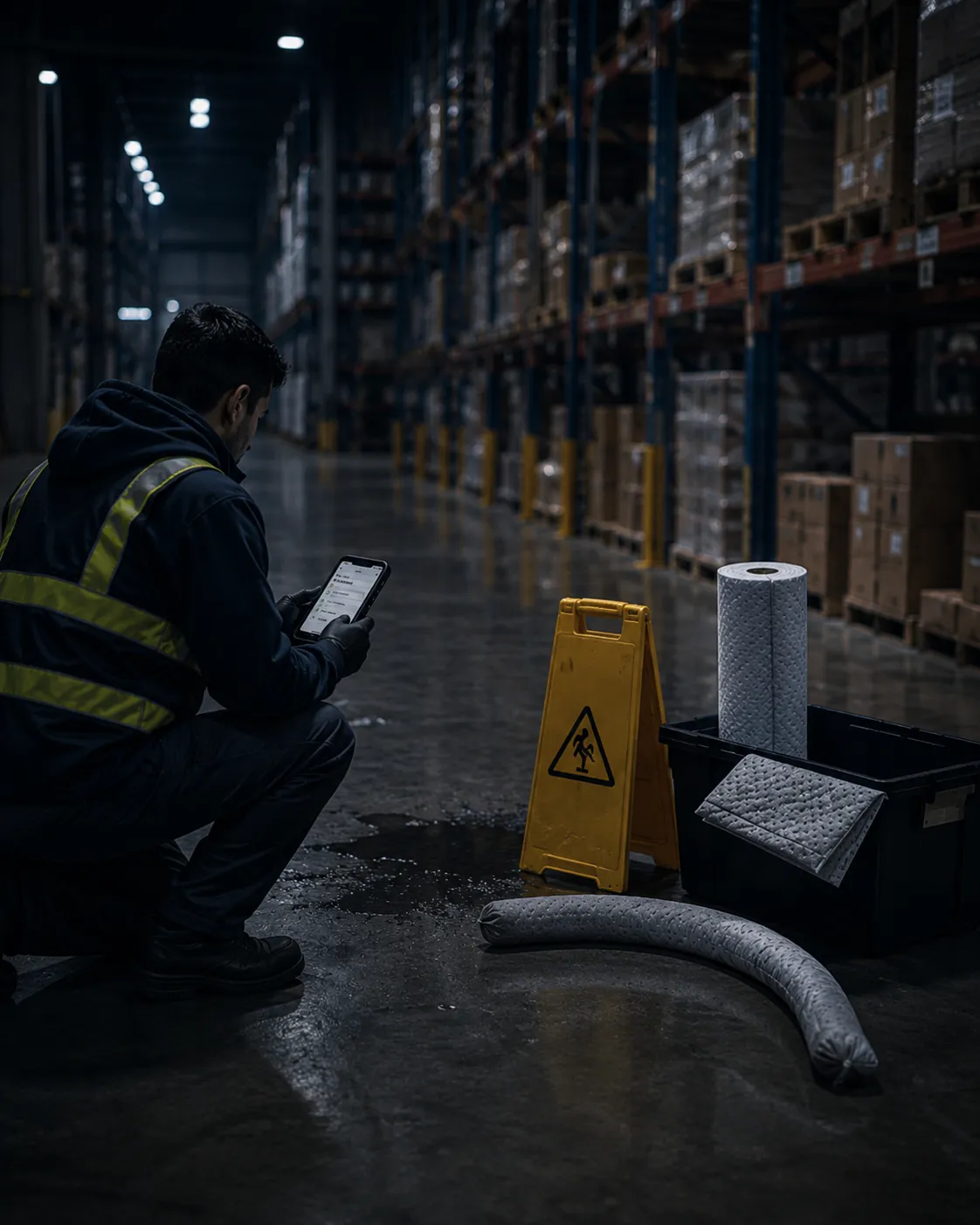 Incident responseThe right steps in hand the moment something spills, breaks or stops.
From one person's know-how to every worker's mobile device
Four steps from the way it is done today to a procedure every crew works from, with the record already written.
- 01
Capture
Record the process once, in short steps with photos and video.
- 02
Train
Assign it by role as onboarding or required training.
- 03
Guide
Workers open it at the machine, on their own device.
- 04
Verify
Completion and signature records, with knowledge checks where they matter.
Integrations
Works with the tools you already run
Assignments reach people in Slack, Alice answers from your Google Drive, and users arrive from your identity provider or HRIS. Zapier and webhooks cover the rest.
See all integrationsSome integrations are on Advance or Enterprise.








Security
Security your IT team
can sign off on
What IT asks about before a rollout, answered.
SOC 2 certified
How your procedures and records are stored and protected is independently audited.
Granular permissions and enforced SSO
Available from the Advance plan, so access control matches how your organisation is already set up.
GDPR aligned
EU and UK data rights documented in the Whale Trust Center.
Your data, your region
Hosted in the US or the EU, whichever you choose.
Enterprise agreements
A BAA is signed on request on the Enterprise plan.
Pricing that doesn't punish high-turnover teams
The people who write and maintain procedures are the paid seats. Everyone who reads them is free.
Scale
Procedures and training for one site. Workers free.
$249per month, billed yearly
Start for FreeRecommended
Advance
SSO, permissions, more creators.
$499per month, billed yearly
Start for FreeEnterprise
HRIS, API, unlimited workspaces.
CustomCustom pricing
Get a Demo
Every worker is included, on every plan. You only pay for the creators who build procedures.
Built for people working on the floor
Get a Demo01What are digital work instructions?
Step-by-step procedures with photos and video, delivered on the worker's phone, or on a shared kiosk on the floor, at the moment the work happens. In Whale each instruction is assigned by role, kept at one current version for every site, and records who completed and signed it.
02We've signed up for things like this before and the staff just doesn't use it.
It is the most common way this fails, and the reason is rarely the content. Adoption dies at the login screen, on an app that crawls on a cheap Android, or in training that feels like homework after a shift. Whale runs on the phone people already carry, with short visual procedures instead of courses, and no company email needed to get in. Start with one crew and one process. You will know inside two weeks whether it sticks.
03Does every worker need a paid seat?
No. The people who write and maintain procedures are the paid seats. Everyone who reads them and completes training is a member, and members are free from the Scale plan up. For a site with 500 people on the floor, that is the difference between licensing a whole workforce and licensing the handful who own the content.
04Our people don't have a company email address.
Most warehouse workers do not have one, so Whale does not ask for it. Each worker gets their own access without an email address, rather than everyone sharing a generic floor login. That distinction matters for the records, because a signature is only worth something if you know which person it belongs to.
05Connectivity is bad in parts of our site.
Coolers, back docks and outlying yards all have dead spots, and that is usually exactly where someone needs the procedure. Whale keeps working when the signal drops, so a worker can open the instruction and finish the task. Completions sync once the device is back on the network.
06We are ISO 9001 certified. How does this fit our QMS?
Whale holds two parts of your quality system: the documented procedures themselves, and the training records against them. That covers the current version of each procedure, who was assigned it, who signed it, and what is overdue. It does not run inspections, nonconformances, or corrective actions, and it is not a replacement for your QMS. Most teams keep the quality system they have and use Whale for the document and training evidence inside it.
07Where do we start? We have hundreds of procedures.
You do not document everything, and trying to is how these projects stall before anyone sees value. Start where mistakes cost the most or where new people ask the most questions, which is usually a handful of procedures per role. Record those with the person who actually does the job, assign them, and add from there.
From the blog
Guides for running the floor


Get your procedures out of people's heads
Book a demo and build your first procedures with us, right on the floor.